
Is Beef Tallow Good for Your Skin? What 200 Years of Use and Modern Science Actually Say
For most people with dry, irritated, or stubborn skin issues, yes, grass-fed beef tallow is good for your skin. It is rich in the same fatty acids and fat-soluble vitamins your skin already uses, and its makeup is remarkably close to sebum, the oil your skin produces on its own. That is why it absorbs deeply instead of sitting on the surface. For dryness, flaking, and a tired skin barrier, a little jar of tallow does what a lot of expensive creams cannot.
We are Ben and Grace, a small family in Lancaster County, Pennsylvania, and we make grass-fed tallow balm because it changed our own skin. Here is the honest version of what tallow can and cannot do, with the science laid out plainly so you can decide for yourself.
See how tallow transformed Sylvia's skin
In this article
- What is beef tallow, exactly?
- Why is tallow so good for skin?
- Does beef tallow clog pores?
- What skin problems can tallow help with?
- Why grass-fed tallow is different
- How to use tallow on your skin
- Frequently asked questions
What is beef tallow, exactly?
Tallow is simply rendered beef fat. The best tallow comes from suet, the hard, white fat that surrounds the kidneys and loins. When it is gently rendered and filtered, it becomes a clean, creamy balm that is solid at room temperature and melts the moment it touches warm skin.
Our ancestors have rubbed it into their skin for thousands of years to soften cracking, calm itching, and hold in moisture. That long history is not an accident. As the Weston A. Price Foundation points out, the Latin word for the oil our own skin makes, sebum, literally means tallow. Our ancestors were not reaching for animal fat by superstition. Their skin recognized it, and they experienced first-hand the profound benefits in the extreme climates their skin had to endure.
Why is tallow so good for skin?
Three things make grass-fed tallow unusually friendly to human skin.
Your skin recognizes it
Tallow is roughly 50 to 55 percent saturated fat, which is close to the makeup of our own cell membranes. Sebum, the oil your skin naturally produces, is also built largely from triglycerides, the same way the fats in tallow are configured. Because the lipid profile is so similar, your skin drinks tallow in and carries it into the deeper layers that need it, rather than letting it pool on top. Modern reviews of skin lipids confirm that the surface oils of healthy skin are mostly triglycerides, wax esters, and squalene, and that these lipids are central to a working skin barrier.
It is full of barrier-building fatty acids
Grass-fed tallow naturally supplies fatty acids like CLA, oleic acid, and palmitic acid, plus small amounts of omega-3 and omega-6. These are the raw materials a healthy skin barrier is made from. The Weston A. Price Foundation's own fatty acid analysis found that grass-fed tallow carries a richer, more complete fatty acid profile than grain-fed, which is exactly why we source our suet from grass-fed cattle on farms we have personally visited and know that farmer by name.
It carries fat-soluble vitamins
Tallow holds small but real amounts of vitamins A, D, E, and K. These fat-soluble vitamins are found in animal fats and are tied to skin health. They are part of why a simple balm can leave skin looking calmer and more alive after only a few weeks of use.
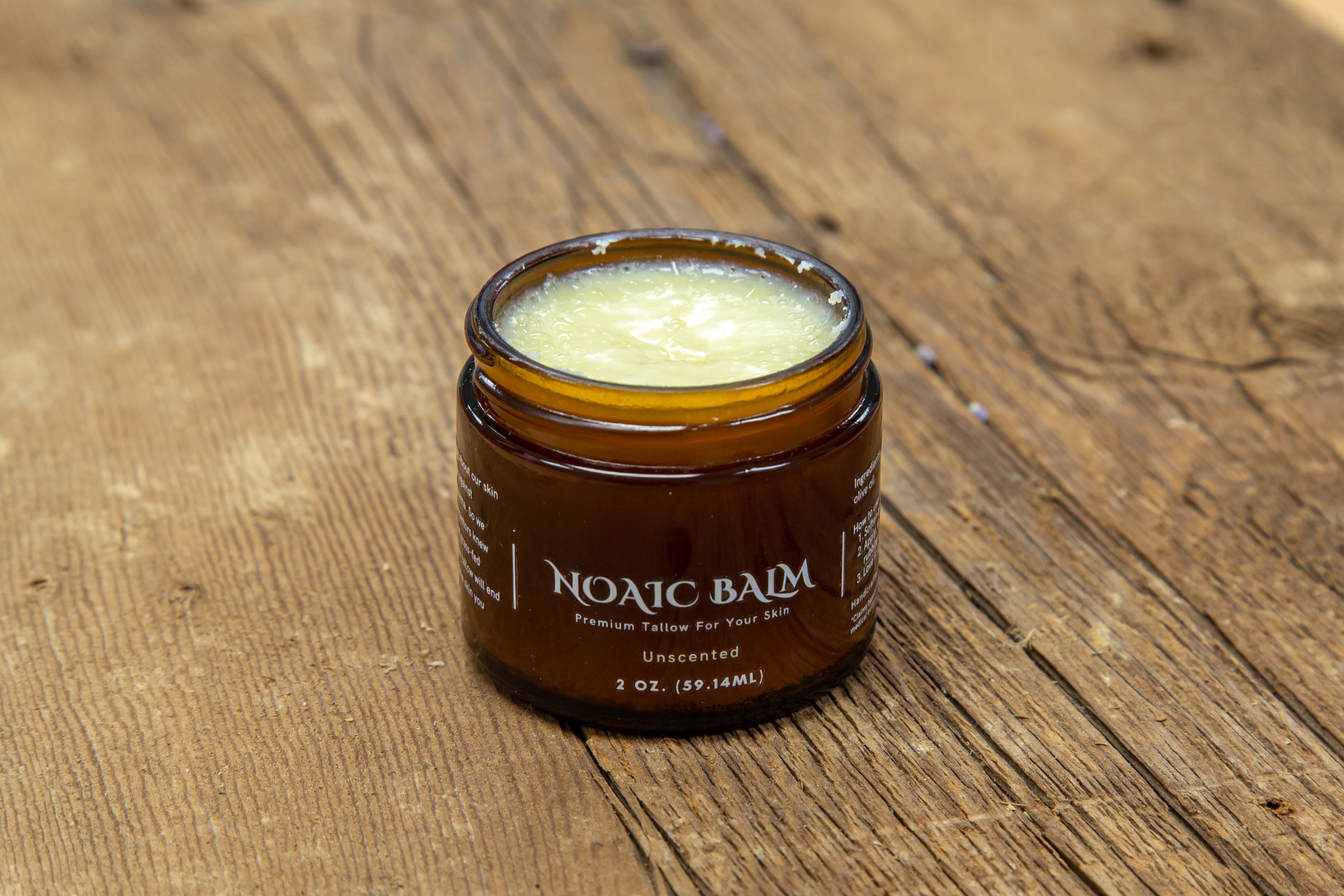
Just grass-fed tallow and organic olive oil, with no added scent. The purest, gentlest way to see what tallow can do for your skin.
Does beef tallow clog pores?
This is the question dermatology sites love to raise. The fair answer is: we've never seen that in practice. And we've served many customers with our tallow balm.
Grass-fed tallow sits low on the comedogenic scale, around a 2 out of 5, meaning low to moderate pore-clogging risk for most people. Skin that runs dry, normal, or eczema-prone tends to tolerate it beautifully. But even very oily or actively acne-prone skin has not been a problem. I (Ben) have very oily skin and tallow seems to balance and lessen the amount of oil my skin produces so that it is more "normal." We have customers who have struggled with acne for years, and not only did the tallow not clog pores, but it resolved their acne. See our testimonial page for details. Clinics like the Cleveland Clinic rightly note that the research here is still thin and that tallow is not a replacement for medical acne treatment. But we're happy to report we've not had a customer yet complain about this. It's been just the opposite for them.
But we will not pretend tallow is magic for every face. What we will say is this: the only way to know how your skin responds is to patch test a small amount for 24 hours, then start slow. For myself (Ben), who fought acne for years and tried the harsh dermatologist route first, switching to tallow was the thing that finally cleared it. Your skin may tell a different story, and that is worth listening to.
What skin problems can tallow help with?
Tallow is not a drug and we make no promises to cure anything. But here is where our customers reach for it most.
Dryness and flaking. This is tallow's home turf. It rehydrates even stubborn, flaky patches and seals that moisture in without a greasy film.
Eczema-prone skin. At the heart of eczema is a weakened skin barrier that cannot hold moisture. Because tallow restocks the barrier with the very fats it is built from, many families use it daily for relief. We wrote a full guide on this: see tallow for eczema.
Dull, tired skin. Plenty of people use tallow simply because it leaves skin soft, calm, and quietly radiant, and they like knowing exactly what is in the jar.
Acne-prone skin. Many have found it calming and exactly what their skin needed.
Why grass-fed tallow is different
Not all skincare fats behave the same way. Here is how grass-fed tallow compares with the products it usually replaces.
| Grass-fed tallow balm | Plant creams & oils | Drugstore lotion | |
|---|---|---|---|
| Match to your skin | Very close to sebum, absorbs deep | Often sits more on the surface | Mostly water and fillers |
| Nutrients | Fatty acids plus vitamins A, D, E, K | Varies by plant | Few, if any |
| Ingredient list | Tallow and olive oil. That is it. | Usually a longer list | Often fragrance and preservatives |
| Feel | Soaks in, no greasy film | Can feel oily on top | Light but short-lived |
Once your skin is happy with the unscented balm, a lightly scented version makes daily use a small pleasure rather than a chore. Our Vanilla Bean is a favorite for hands, elbows, and anywhere that drinks up moisture.
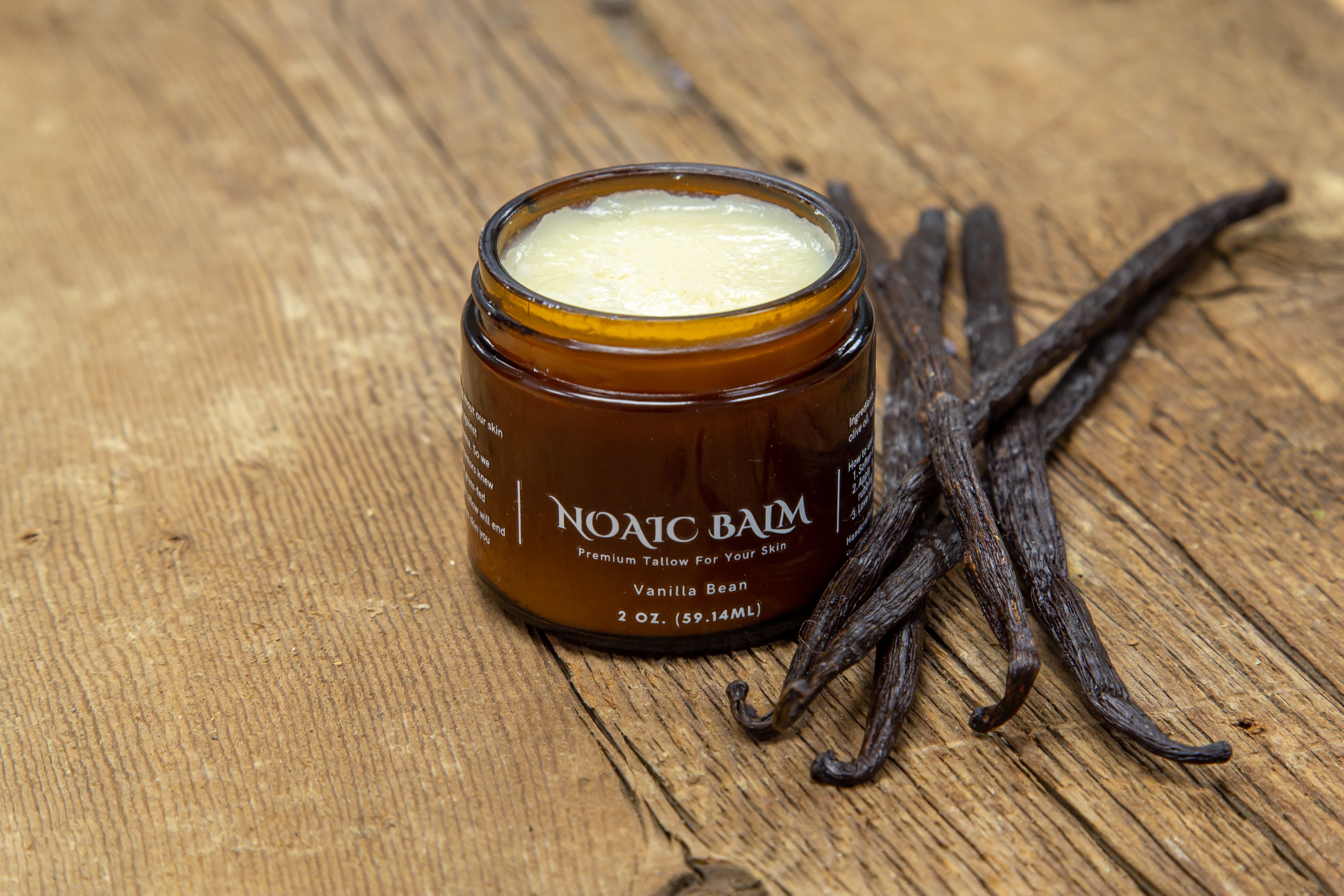
The same grass-fed tallow with a soft, warm vanilla scent. A simple everyday balm once your skin has met tallow and loved it.
How to use tallow on your skin
Tallow is about as simple as skincare gets. Three steps.
1. Patch test first. Rub a little into your inner wrist or elbow and wait 24 hours, especially if your skin is sensitive or reactive.
2. Apply to skin. Right after a bath or shower, warm a small amount between your fingertips and massage it gently into the areas that need it. You can also use it at any time. A little goes a long way.
3. Use it daily. Consistency is everything. Many of our customers use it morning and night, and reach for it whenever skin feels tight.
Frequently asked questions
Is beef tallow good for your face?
For dry, normal, or mature skin, yes. It even does well for oily and acne prone skin You can use it in place of a daily moisturizer, and a small amount hydrates the whole face and neck.
Does tallow clog pores?
We've never seen it clog pores, and it sits low on the comedogenic scale.
Is tallow greasy?
No, and we know the greasy feeling you are worried about, because we cannot stand it either. Instead of sitting on top of your skin, our tallow soaks in and leaves a softness without a film.
Is grass-fed tallow better than regular tallow?
Yes, grass-fed tallow carries a richer fatty acid profile, which is why every jar we make starts with suet from grass-fed cattle here in Lancaster County.
How long does a jar last?
Use it within 6 months to a year. To keep it longer, store it in the refrigerator or freezer, and always avoid getting moisture inside the jar.
Give tallow 30 days
See what a little jar can do, results that $200 creams cannot touch. Send us your story after 30 days. We cannot wait to celebrate with you.
Shop Tallow →Free shipping on USA orders over $75.
Ben is the co-founder of Noaic Balm, a small family company in Lancaster County, Pennsylvania. After battling acne for years and trying everything the dermatologist offered, he and his wife Grace turned to grass-fed tallow and never looked back. Read our story.
The information on this page is for educational purposes only and is not intended as medical advice. Noaic Balm products are not intended to diagnose, treat, cure, or prevent any disease. Always consult your doctor or dermatologist before starting any new skincare routine, and test new products on a small area of skin first.